








How to Track Competitor Prices at Scale (Without Getting Blocked)
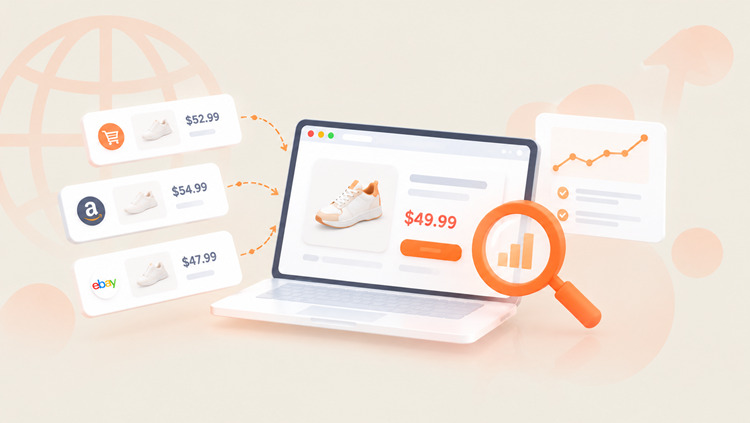
⏱️ A rival drops its price at noon. You notice a week later. By then, the sales are gone.
Many e-commerce teams know this pain. Most try a quick script to track competitor prices. Then the errors begin. You see "403 Forbidden" pages, sudden CAPTCHAs, and blocked IP addresses.
Manual copy-pasting cannot fix this at scale. You need an automated price monitoring system. You also need the right proxies behind it. Specialized proxies built for Competitor Analysis help your scrapers reach public pricing pages reliably across regions.
⚡ Key Takeaways
- 📈 Speed matters: Dynamic pricing means rivals can change prices several times a day. Manual checks cannot keep up.
- 🛡️ Blocks are the main obstacle: Many large retailers use web application firewalls (WAFs) and bot detection to stop scrapers.
- 🌍 Proxies help: Rotating proxies spread your requests across many IPs and locations. This reduces blocks and shows you local prices.
- ✅ Accuracy comes first: Match the right products, check stock status, and validate every data point.
First, let us see why tracking competitor prices matters so much.
💡 Why Track Competitor Prices?
Price tracking is the backbone of a competitive retail strategy. Customers compare prices in seconds. If you ignore rival pricing, you risk losing sales and margin.
Tracking competitor prices helps you:
- 💰 Protect profit margins: Spot when rivals raise prices. You may be able to raise yours without hurting sales volume.
- 🏷️ Catch deals early: Detect flash sales, seasonal discounts, and clearance markdowns before shoppers leave.
- 🛒 Support Buy Box strategy: On marketplaces like Amazon, price is one of several factors that affect Buy Box wins. Fresh competitor data helps your repricing tools react.
- 📊 Spot market trends: Build price history to forecast demand and plan inventory.
- 🎯 Position your brand: See where you sit against rivals, whether you aim to be the cheapest or the premium option.
Next, let us look at what data you should actually collect.
🔍 What Competitor Data Should You Track?
The price tag is only part of the story. A rival who is 5% cheaper but out of stock is not a real threat. Track these data points together:
- Regular price and sale price
- Stock status (in stock, low stock, out of stock)
- Shipping costs and delivery times
- Promotions such as coupons, bundles, and volume discounts
- Seller or marketplace (first-party or third-party)
- Timestamp and location of each data point
Also, do not try to track everyone. Start with a short list of direct competitors and your best-selling SKUs. Then expand.
Now let us compare the main ways to collect this data.
🧭 How to Track Competitor Prices: 3 Main Methods
Retailers usually choose one of three approaches.
| Method | Best for | Main drawback |
|---|---|---|
| Manual monitoring | Very small catalogs | Slow, error-prone, and impossible to scale |
| Pricing intelligence platforms | Teams without developers | Subscription costs and less control over data collection |
| Custom automated scrapers | Large catalogs and custom needs | Needs engineering time and anti-block infrastructure |
1. Manual Monitoring
You open each competitor page and log prices in a spreadsheet. This works for a handful of products. It fails fast. Tracking 50 products across 10 sites already means 500 data points.
2. Pricing Intelligence Platforms
Tools such as Prisync, Price2Spy, Priceva, and Minderest handle matching, alerts, and reporting for you. They are convenient. Costs and coverage vary, so compare plans against your SKU count and target sites.
3. Custom Automated Scrapers
You build scripts that visit competitor pages and extract prices on a schedule. This gives you full control and flexible data. For a deeper dive, read our guide on how to scrape data from an e-commerce website.
🧪 Quick tip: Starting small? Google Sheets can pull some prices with the IMPORTXML function. Test it on a few real URLs first. It often breaks when a site changes its layout or loads prices with JavaScript.
⚠️ Why Manual Price Tracking Fails in Modern E-Commerce
Three factors make manual checks unreliable.
⚡ The Speed of Dynamic Pricing
Many retailers use dynamic pricing. Prices can shift with stock levels, demand, time of day, and competitor moves. Some products change price several times in one day. A Monday check compared with a Friday check is not a real comparison.
🌍 Location-Based Pricing
The price on your screen may not match what a buyer sees elsewhere. Retailers can adjust prices, promotions, and shipping fees by country or city. Tracking from one location gives you incomplete data.
🚫 The Trap of Static Scripts
Run a simple script from one office or cloud server IP, and sites may spot the pattern quickly. Repeated requests from a single IP are a classic bot signal. Your IP can then be throttled, challenged, or blocked.
Let us examine the deeper technical barriers you will face when scaling up.
🧱 Core Challenges When You Track Competitor Prices at Scale
Scaling a price tracker means dealing with anti-scraping measures. Here are the most common ones.
🛡️ Anti-Bot and WAF Defenses
Many retailers use bot-management tools such as Cloudflare, Akamai, or PerimeterX (now HUMAN). These systems analyze traffic patterns, IP reputation, and browser fingerprints. They challenge or block requests that look automated.
🔁 CAPTCHAs and Rate Limiting
Request too many pages too fast, and the server may show CAPTCHAs. It may also return HTTP 429 (Too Many Requests). Your data pipeline then stalls.
🧩 JavaScript-Rendered Prices
Many stores load prices with JavaScript after the page opens. A basic HTTP request can return an empty price field. You may need a headless browser to render the page.
🎭 Inaccurate or Altered Data
Some sites may serve different content to suspected bots. You may receive stale prices, missing discounts, or blank fields. Always validate your data, as covered in the best practices below.
🔗 Product Matching
Comparing the wrong items ruins your analysis. Match products using identifiers like GTIN, UPC, or MPN where possible. Check size, color, and bundle details too.
🚀 Unlock Reliable E-Commerce Intelligence
Tired of blocks breaking your pricing data? Explore our dedicated Competitor Analysis Proxies. Collect public retail data with stable, rotating IPs and precise geo-targeting.
With the challenges clear, let us build your automated price tracker.
🛠️ Step-by-Step: How to Build an Automated Competitor Price Tracker
Follow these five steps to set up a solid price monitoring system.
Step 1: Define Your Targets and Frequency
List your core SKUs and competitor storefronts. Decide how often to check them, such as hourly or daily. A narrow scope saves time, bandwidth, and proxy costs.
Step 2: Choose Your Scraping Stack
Pick tools that fit your team. Python with Scrapy works well for fast, static pages. Playwright (Python or Node.js) and Puppeteer (Node.js) can render JavaScript-heavy pages.
Step 3: Add Rotating Proxies
Proxies are a key part of the stack. They route your requests through different IP addresses. This spreads the load, helps you avoid rate limits, and lets you view prices from specific countries or cities. Pair them with sensible request rates.
Step 4: Clean and Store the Data
Extract price, currency, stock status, and timestamp. Normalize currencies and formats. Then store the results in a database such as PostgreSQL or MongoDB. Keep price history so you can spot trends.
Step 5: Set Up Alerts and a Dashboard
Create rules that fit your strategy. For example, send a Slack or email alert when a main competitor cuts a price by more than 10%. Add a dashboard to see price gaps at a glance.
Your scraper is only as good as its proxy infrastructure, so let us pick the right one.
🔌 Which Proxy Types Are Best for Tracking Competitor Prices?
Different sites need different proxies. Here are four common options.
1. Rotating Residential Proxies (Best All-Around Choice)
- ✅ Why it works: These IPs come from real home internet connections. They look like ordinary shoppers, so they tend to face fewer blocks on well-protected sites.
- 🎯 Best for: Large-scale, multi-country price and stock collection on major marketplaces and retailers.
2. Rotating Datacenter Proxies (Fast and Budget-Friendly)
- ✅ Why it works: They run on cloud infrastructure, so they offer high speed at a low cost.
- 🎯 Best for: Less-protected retail sites where speed matters more than IP trust. Sites with strict bot detection may flag them more often.
3. Static ISP Proxies (Best for Long Sessions)
- ✅ Why it works: These are fixed IP addresses registered to internet service providers and hosted on fast servers. You get datacenter-like speed with stronger trust signals.
- 🎯 Best for: Stable sessions on accounts you are authorized to use, such as your own seller dashboards or wholesale portals where you hold access.
4. Rotating Mobile Proxies (For Strict Platforms)
- ✅ Why it works: Traffic goes through 4G/5G carrier networks. Carriers often share one IP among many users, so sites are cautious about blocking these IPs.
- 🎯 Best for: Mobile-first platforms and apps, and sites with very strict bot detection. Mobile proxies usually cost more, so use them where needed.
🔎 What to look for in a proxy provider:
- Wide country and city coverage for local pricing checks
- Flexible rotation and sticky sessions
- High success rates and low latency
- Clear information on how IPs are sourced
- Responsive support
🔥 Ready to Automate Your Pricing Strategy?
Spend your time on pricing decisions, not on fighting blocks. Try UtaProxy today and power your scrapers with clean, high-performance rotating IPs from a pool of 100M+ IPs across 200+ locations worldwide.
Good habits keep your scrapers running cleanly. Here is what to follow.
✅ Best Practices for Ethical and Efficient Price Scraping
⏳ Tip 1: Add Random Request Delays
Do not hit servers at robotic speed. Add random delays, for example 2 to 5 seconds, between requests. This is also kinder to the sites you visit.
🔄 Tip 2: Use Realistic Headers and Browser Settings
Use current, realistic user-agent strings and headers. Keep them consistent with your browser and device profile. Random mismatches can look suspicious.
🩺 Tip 3: Monitor Proxy Health
Track latency, success rates, and error codes such as 403 and 429. Drop slow or flagged IPs automatically.
🔁 Tip 4: Retry Smartly
Use exponential backoff after errors. Do not retry in a tight loop.
🧮 Tip 5: Validate Your Data
Set sanity checks. Flag prices that drop by 90% overnight or return as zero. Compare a sample against the live page by hand.
📜 Tip 6: Respect Site Rules
Check robots.txt and the site's terms of use. Collect only public product data. Avoid personal data. Keep your request volume low.
Review the answers below for common questions about price scraping.
❓ Frequently Asked Questions (FAQ)
Is it legal to scrape competitor prices?
It depends. Prices shown on public pages are facts, and collecting them is a common business practice. Still, the rules vary by country. Terms of service, access methods, and request volume can all matter. Avoid personal data, avoid logged-in areas you are not authorized to use, and never overload a server.
How often should I track competitor prices?
It depends on your market. A rough guide:
- ⚡ Fast-moving categories (electronics, consumer goods): every 1 to 2 hours
- 🛍️ Standard products: once or twice a day
- 🐢 Niche or slow-moving products: daily or weekly
Start with a moderate frequency. Then adjust based on how often prices actually change.
What is the best way to track competitor prices on Amazon?
Use a pricing tool or a scraper that handles JavaScript, rotating IPs, and local marketplaces. Track Buy Box price, seller type, and stock status, not just the listed price. Check the marketplace's rules and any official data programs first.
Why did my price scraper suddenly start getting CAPTCHAs?
Your traffic probably looked automated. Common causes include too many requests from one IP, a flagged IP range, missing browser signals, or very fast request rates. Slow down, rotate high-quality residential IPs, and use a real browser setup where needed.
Can I track competitor prices in different countries?
Yes. Use geo-targeted proxies to view a site as a local shopper would. Record the country, city, and currency with each data point.
Do I need proxies to track competitor prices?
For a few pages, you may not. At scale, a single IP gets blocked or challenged quickly. Proxies help you spread requests and check regional prices.
🏁 Final Verdict
Real-time price tracking is essential in today's e-commerce market. Automated scrapers remove manual work. Quality proxies help keep your data flowing, even on well-protected sites. Combine both with smart request habits and data checks, and you can track competitor prices accurately and at scale.
Daniel Carter
Proxy & Web Data Specialist
Daniel Carter is a Proxy & Web Data Specialist at UtaProxy, focusing on proxy technology, web data collection, and online infrastructure. He writes practical guides and in-depth insights to help businesses understand proxy solutions, choose the right proxy type, and build more reliable data workflows.
You May Also Be Interested
Rotating Proxies Explained: A Complete Guide for Scraping, SEO & Automation
Learn what a rotating proxy is, how IP rotation works, the 4 main types, real use cases & setup steps. Stop IP bans and scale your scraping.

Scrape Data from Ecommerce Websites: Tools, Code & Proxies
Learn how to scrape data from an ecommerce website step by step. Get working Python code, avoid blocks and CAPTCHAs, and pick the right proxies.